
Summary
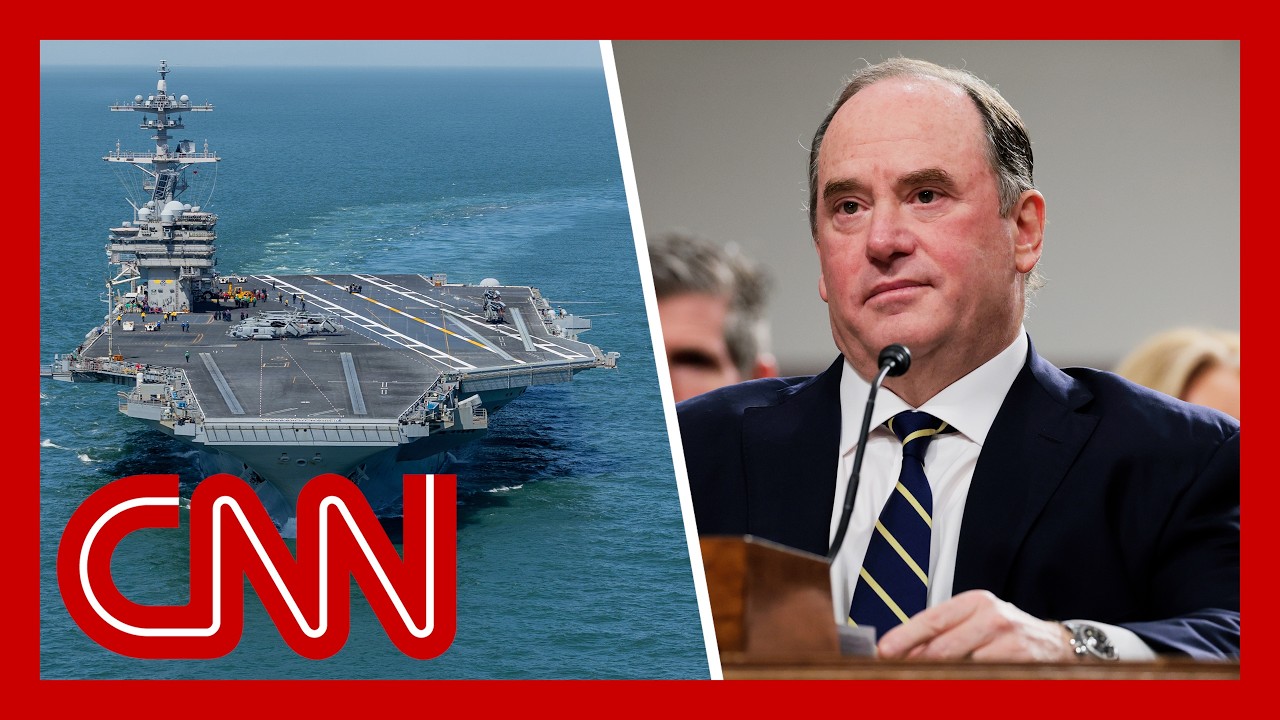
The **Navy Secretary**, **John Phelan**, has been removed from his position amid **Pentagon** infighting. The tensions arose from Phelan's support for a new **battleship**, a move that sparked controversy within the department. This development comes as the **US military** is undergoing significant changes, with debates over **defense spending** and **military modernization**. The **Pentagon** is facing challenges in balancing its budget while investing in new technologies and equipment. The removal of Phelan is seen as a significant shift in the **Navy**'s leadership and may impact its future direction. For more information on the **US military**, visit [[us-military|US Military]] and for details on **defense spending**, see [[defense-spending|Defense Spending]]. The **Navy**'s plans for a new **battleship** have been a topic of discussion, with some arguing it is necessary for the country's **national security**, while others believe it is a waste of resources. The **Pentagon**'s infighting over this issue highlights the complexities of **defense policy** and the challenges of making decisions about **military spending**. To learn more about **national security**, visit [[national-security|National Security]] and for insights into **military spending**, see [[military-spending|Military Spending]].
Key Takeaways
- The **Navy Secretary**, **John Phelan**, has been removed from his position
- The removal is due to infighting over a new **battleship**
- The **Pentagon** is facing challenges in balancing its budget while investing in new technologies and equipment
- The **US military** is struggling to adapt to new technologies and threats
- The removal of Phelan could have significant implications for the **US military**'s ability to maintain its **national security**
Balanced Perspective
The departure of **John Phelan** is a significant development in the **Pentagon**'s ongoing struggles with **defense spending** and **military modernization**. The **Navy**'s plans for a new **battleship** have been a point of contention, with some arguing it is necessary for the country's **national security**, while others believe it is a waste of resources. The **Pentagon**'s infighting over this issue highlights the complexities of **defense policy** and the challenges of making decisions about **military spending**. For more information on **defense policy**, visit [[defense-policy|Defense Policy]] and for insights into **military modernization**, see [[military-modernization|Military Modernization]].
Optimistic View
The removal of **John Phelan** could be an opportunity for the **Navy** to reassess its priorities and focus on more pressing issues, such as **cybersecurity** and **artificial intelligence**. This change in leadership may also lead to a more collaborative approach to **defense policy**, with the **Pentagon** working more closely with other branches of the military. For more on **cybersecurity**, visit [[cybersecurity|Cybersecurity]] and for information on **artificial intelligence**, see [[artificial-intelligence|Artificial Intelligence]]. The **US military**'s ability to adapt to new technologies and threats will be crucial in maintaining its **national security**. To learn more about the **US military**'s approach to **national security**, visit [[us-military-national-security|US Military National Security]].
Critical View
The removal of **John Phelan** could be a sign of deeper problems within the **Pentagon**, with **infighting** and **power struggles** hindering the **US military**'s ability to make effective decisions. The **Navy**'s plans for a new **battleship** may be a symptom of a larger issue, with the **military** prioritizing outdated technologies over more pressing threats, such as **cybersecurity** and **terrorism**. For more on **cybersecurity**, visit [[cybersecurity|Cybersecurity]] and for information on **terrorism**, see [[terrorism|Terrorism]]. This development could also lead to a lack of stability and continuity in the **Navy**'s leadership, which could have negative consequences for the **US military** as a whole. To learn more about the **US military**'s leadership, visit [[us-military-leadership|US Military Leadership]].
Source
Originally reported by Politico