Erdogan Claims Iran War is Weakening Europe | GAI Deals News
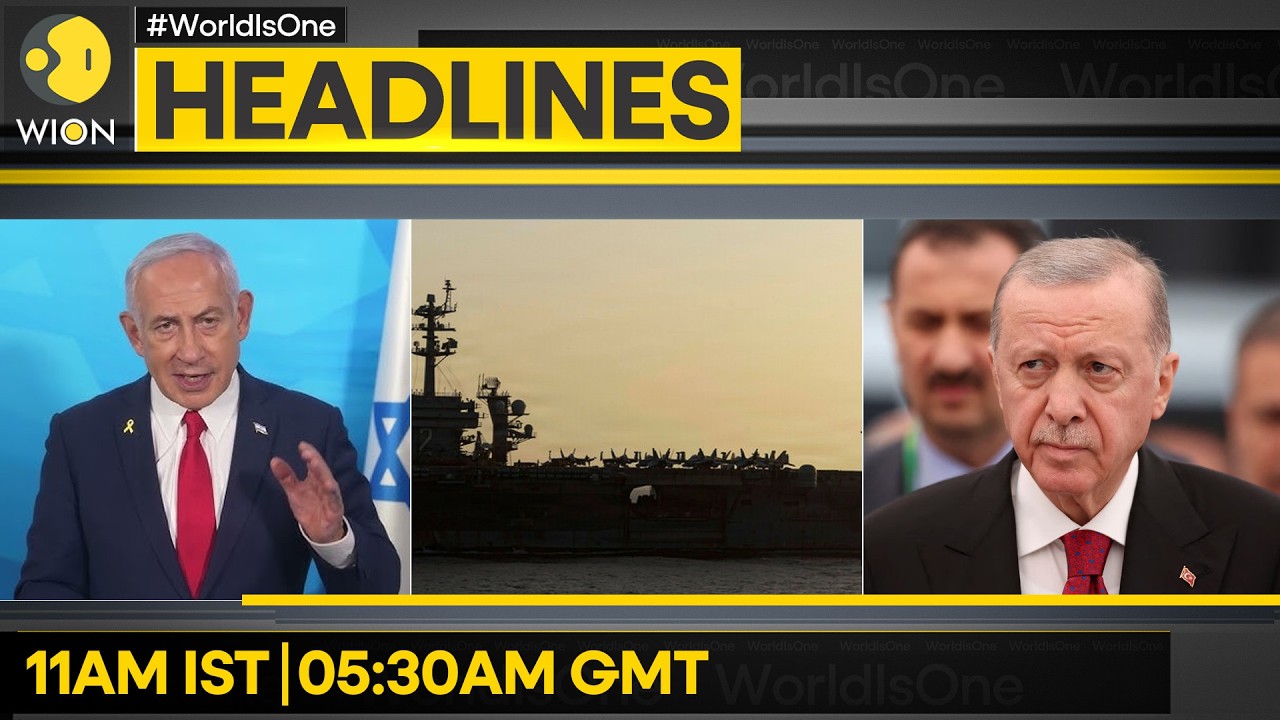
The ongoing **US-Israeli war against Iran** has prompted Turkish president **Recep Tayyip Erdoğan** to express concerns that the conflict is **starting to weake
Summary
The ongoing **US-Israeli war against Iran** has prompted Turkish president **Recep Tayyip Erdoğan** to express concerns that the conflict is **starting to weaken Europe**. This statement was made during a conversation with his German counterpart, highlighting the potential for broader geopolitical implications. The situation in the Middle East remains volatile, with the **Iran war** and the **US blockade of the Strait of Hormuz** contributing to regional tensions. As the conflict escalates, it is essential to consider the perspectives of various nations, including **Iran**, **Israel**, and **Turkey**, as well as the role of global powers like the **US** and **Europe**. The crisis has sparked debates about **Middle East politics**, **global security**, and the potential for a wider conflict. For more information, see [[middle-east-politics|Middle East Politics]] and [[global-security|Global Security]].
Key Takeaways
- The US-Israeli war against Iran has prompted concerns about European stability
- The conflict has significant implications for global security and energy supplies
- Diplomatic initiatives and cooperation between nations are crucial for resolving the conflict
- The European Union can play a key role in mediating the conflict and promoting regional stability
- Individuals can support humanitarian efforts and stay informed through reliable news sources
Balanced Perspective
A neutral perspective acknowledges the complexity of the situation and the need for a **nuanced understanding** of the various factors at play. The conflict involves multiple nations and interests, and its outcome will depend on a range of factors, including **military strategy**, **diplomatic efforts**, and **economic pressures**. It is essential to consider the **historical context** of the region and the **current geopolitical landscape**. For more information, see [[middle-east-history|Middle East History]] and [[geopolitical-landscape|Geopolitical Landscape]].
Optimistic View
From a optimistic perspective, the current conflict could lead to a **re-evaluation of global alliances** and a potential **shift in the balance of power** in the Middle East. This could create opportunities for **new diplomatic initiatives** and **cooperation between nations**. The **European Union** may play a crucial role in mediating the conflict and promoting **regional stability**. For more information, see [[diplomatic-initiatives|Diplomatic Initiatives]] and [[regional-stability|Regional Stability]].
Critical View
From a pessimistic perspective, the conflict has the potential to **escalate into a wider war**, drawing in multiple nations and causing significant **humanitarian suffering**. The **US blockade of the Strait of Hormuz** could lead to a **global economic crisis**, and the **European economy** may be particularly vulnerable to disruptions in **energy supplies**. The conflict could also have **long-term consequences** for **global security** and **regional stability**. For more information, see [[global-economic-crisis|Global Economic Crisis]] and [[humanitarian-suffering|Humanitarian Suffering]].
Source
Originally reported by The Guardian